
The Psychology Behind Discounts and Sales
Let’s be honest we’ve all been there. You go into a store merely to look around, but yet you leave with three bags full of stuff you “absolutely needed” because they were on sale. Does this sound familiar? Don’t worry, you’re not weak-willed or bad with money. There is some really interesting psychology of discounts going on here, and stores know precisely how to press your buttons. Let me explain what’s actually going on in your brain when you see that big red “SALE” sign.
Your Brain on Discounts
When you find a good deal, your brain gets a burst of dopamine, which is the same neurotransmitter that makes you feel good when you eat chocolate or get a text from your crush. It’s little wonder that sales feel so fantastic!
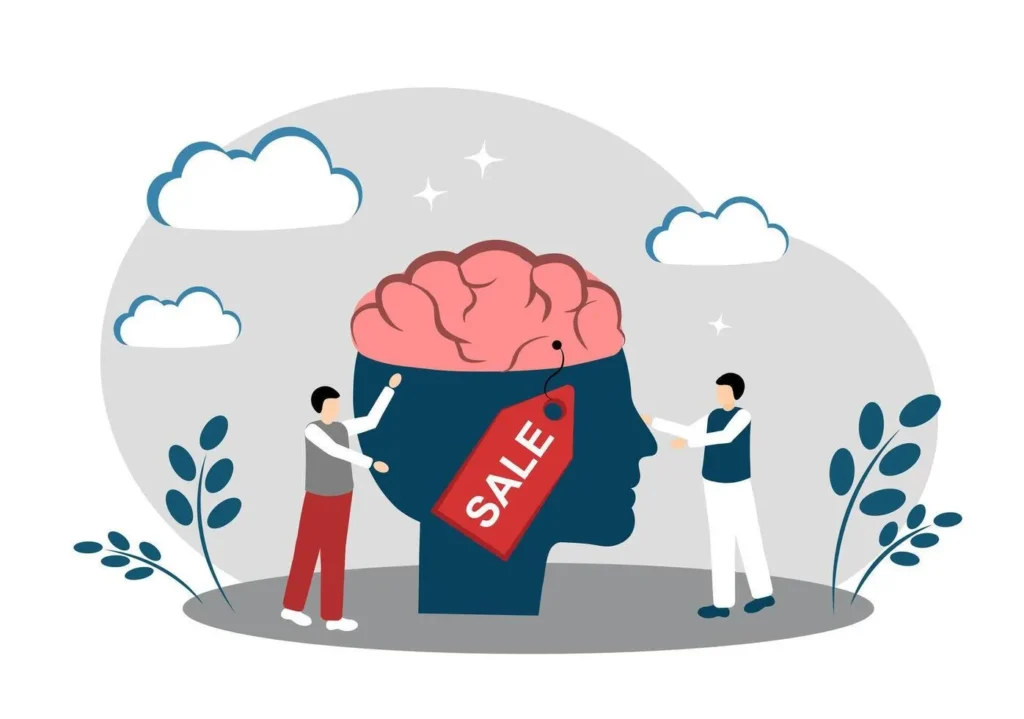
The tricky part? This little rush of happiness can make you forget to ask the important question: “Do I actually need this?” Instead, your brain is too busy celebrating the fact that you’re “saving” $30 on a toaster you weren’t planning to buy in the first place.
“Only 2 Left!” (And Why That Makes You Panic)
You know that mini heart attack you get when you see “Only 2 items left in stock” or “Sale ends in 3 hours”? That’s not an accident.
This is retailers playing on something called scarcity. When something seems rare or about to disappear, we suddenly want it way more. It’s like when someone says “don’t think about pink elephants”—suddenly that’s all you can think about!
Those countdown timers on websites? They’re not just keeping you informed. They’re literally designed to make you feel anxious enough to click “Buy Now” before you’ve had time to think it through.
The Crossed-Out Price Trick
Ever wonder why stores always show you the original price with a big line through it next to the sale price? Like this: $100 $50
That’s called anchoring, and it’s sneaky but brilliant. The first number you see sets the stage for everything that comes after. So when you see that $100 first, suddenly $50 feels like you’re practically stealing the item.
But here’s the thing—maybe that item was never really worth $100 in the first place. Maybe $50 is actually what it’s worth. But because you saw $100 first, you’re convinced you’re getting an amazing deal.
“Buy 2, Get 1 Free” vs “33% Off”
Quick question: which sounds better to you?
Buy 2, get 1 free
33% off when you buy 3
They’re the exact same deal mathematically, but I’m willing to bet the first one got you more excited, right?
That’s because our brains go absolutely wild for the word “FREE.” It doesn’t matter that you’re still spending money free feels like magic. Retailers know this, which is why they’ll bend over backward to use that word instead of just giving you a straight discount. So if you want real savings without the marketing tricks, you can use genuine discount coupon.
When Everyone Else Wants It, You Want It More
Think about Black Friday. Part of the excitement isn’t just the deals it’s the chaos, the crowds, the competition. When you see other people fighting over discounted shoes, it makes those shoes seem more valuable, even if you were perfectly happy with your current shoes last week.
This is called social proof, and it’s why stores sometimes intentionally create a bit of chaos during sales. If everyone else wants it, you feel like you’re missing out if you don’t jump in too.
Why Sales Actually Stress You Out (Even Though They’re Supposed to Be Fun)
Here’s something you might not realize: sales can be exhausting. When you’re faced with 50 different discounted items, all with different percentages off and “limited time only” tags, your brain actually gets tired from making so many decisions.
This is called decision fatigue, and when your brain gets tired, you stop thinking carefully. You just want to make a decision and be done with it. And guess what? That’s when you’re most likely to buy something impulsively.
Retailers count on this. The overwhelming number of options plus the time pressure equals you making faster, less thoughtful choices.
The “Don’t Miss Out” Feeling
Let’s talk about something psychologists call loss aversion. Basically, we hate losing things more than we like gaining things.
When you see a sale, your brain doesn’t think “I could spend $50.” It thinks “I could LOSE OUT on saving $50!”
See the difference? The sale makes you feel like not buying is the same as losing money. It flips the whole situation on its head. Suddenly, spending money feels like the smart, responsible thing to do.
How to Beat the System (Or at Least Play Smarter)
Now that you know what’s happening behind the scenes, here are some real-world tips that actually work
Before any sale, make a list of things you genuinely need and set a budget. Seriously, write it down on your phone. When you’re in the store and that dopamine hits, you can look at your list and ask: “Is this on here?”
Try the 24-hour rule for anything over $50. See something on sale? Great! Wait 24 hours before buying it. If you still want it tomorrow, maybe it’s worth it. If you forget about it, well, there’s your answer.
Ask yourself this magic question: “Would I buy this if it wasn’t on sale?” If the answer is no, then you don’t really want the item you just want the feeling of getting a deal.
And remember, the money you don’t spend is money saved. I know that sounds obvious, but when you’re in sale mode, it’s easy to forget. Not buying something you don’t need is a 100% discount.
The Real Talk
Look, I’m not saying never shop sales or that you should feel guilty about enjoying a good deal. Sales can be genuinely useful when you’re buying things you actually need.
The point is to be aware of what’s happening. Retailers spend millions of dollars researching how to get you to buy more. They’ve got entire teams of people figuring out the perfect color for that “SALE” sign and the exact wording that makes you reach for your wallet.

But now you’re in on the secret. You know about the dopamine, the scarcity tactics, the anchoring tricks, and all the rest. And knowing is half the battle.
Next time you’re tempted by a sale, just take a breath. Notice what you’re feeling. Are you excited because this is something you’ve been wanting? Or are you excited because your brain is getting a hit of that sweet, sweet discount dopamine?
There’s no shame either way we’re all human. But at least now you’re shopping with your eyes open.
Happy (and hopefully smarter) shopping!